Is AEO/GEO Just Repackaged SEO? What Google’s Own May 2026 Guidance Actually Says
On May 15, 2026, Google published its first official guide to optimizing for generative AI features in Search — and one line rattled the AEO/GEO industry: that this is, in Google’s own framing, still SEO. The guide debunks specific tactics as unnecessary. It isn’t the whole answer, though — Google’s systems aren’t the only AI systems a buyer’s research runs through.

What did Google’s May 2026 guide actually say about AEO and GEO?
Google’s guide — titled Optimizing your website for generative AI features on Google Search — now lives under a new “Generative AI fundamentals” section of Google’s Search Central documentation. It was announced through the Google Search Central Blog and covers appearance in AI Overviews and AI Mode. A few of its more direct claims:
- You don’t need an llms.txt file or special AI-readable markup. Google’s crawlers discover and index many file types, but the guide is explicit that none of them get special treatment for AI features.
- You don’t need to “chunk” content into small pieces for AI systems. Google says its systems can understand multiple topics within a single page and surface the relevant part without pre-splitting it. Danny Sullivan, who leads Google’s Search Relations team, made a similar point back in January 2026, discouraging chunking directly.
- You don’t need to rewrite content to capture every long-tail phrasing an AI system might use. The guide says its systems handle synonyms and general meaning without that kind of manual coverage.
- Structured data is framed as good general SEO practice, not an AI-specific requirement. It helps eligibility for rich results broadly; it isn’t presented as a separate AI-visibility lever. See what this looks like applied in practice on our own AI search optimization work.
- The technical basics still matter. Pages need to be indexed and snippet-eligible, semantic HTML and JavaScript SEO practices still apply, and page experience and duplicate-content cleanup are both called out directly.
- Spam policies apply to AI-generated results the same way they apply to regular Search, including flagging inauthentic brand mentions. That’s worth sitting with if a GEO strategy leans on paid or reciprocal placements rather than earned ones.
Put simply, the message is that Google’s generative AI features run on the same core ranking systems as the rest of Search. The foundational work — useful, non-commodity content, technical crawlability, real authority — carries over, rather than requiring a separate parallel discipline.
Why are some critics calling AEO/GEO retainers overpriced SEO?
Google’s guide gave public voice to a skepticism that had already been building for months among sophisticated B2B buyers. CMSWire’s April 2026 coverage of Adobe Summit captured it directly. Jairus Mitchell, who leads what Red Hat calls “content findability,” described the field as having a genuine crisis of faith, warning that plenty of AEO vendors are selling tactics — FAQ blocks, Reddit-presence building, Wikipedia edits — for a gold rush that hasn’t paid off for everyone who bought in. Dave Wallace, who has managed AdvancedMD’s web presence for over a decade, reported organic traffic dropping sharply over a recent three-month stretch despite running that exact playbook.
Worth adding the nuance the skepticism headline can miss: the same reporting found Wallace’s overall site traffic hadn’t collapsed nearly as steeply as his organic-only numbers implied, once direct visits were counted separately. A cratering organic dashboard doesn’t automatically mean a cratering audience — some of what looks like lost traffic may simply be showing up in a different bucket.
One piece of commentary this year proposed a simple test for any agency pitching a premium AEO/GEO retainer: ask what specifically differs from standard SEO work, how the results are measured separately from organic search performance, and whether the agency can point to Google’s own documentation supporting AEO/GEO as a genuinely distinct discipline. That last question got considerably harder to answer cleanly the day Google’s guide went up.
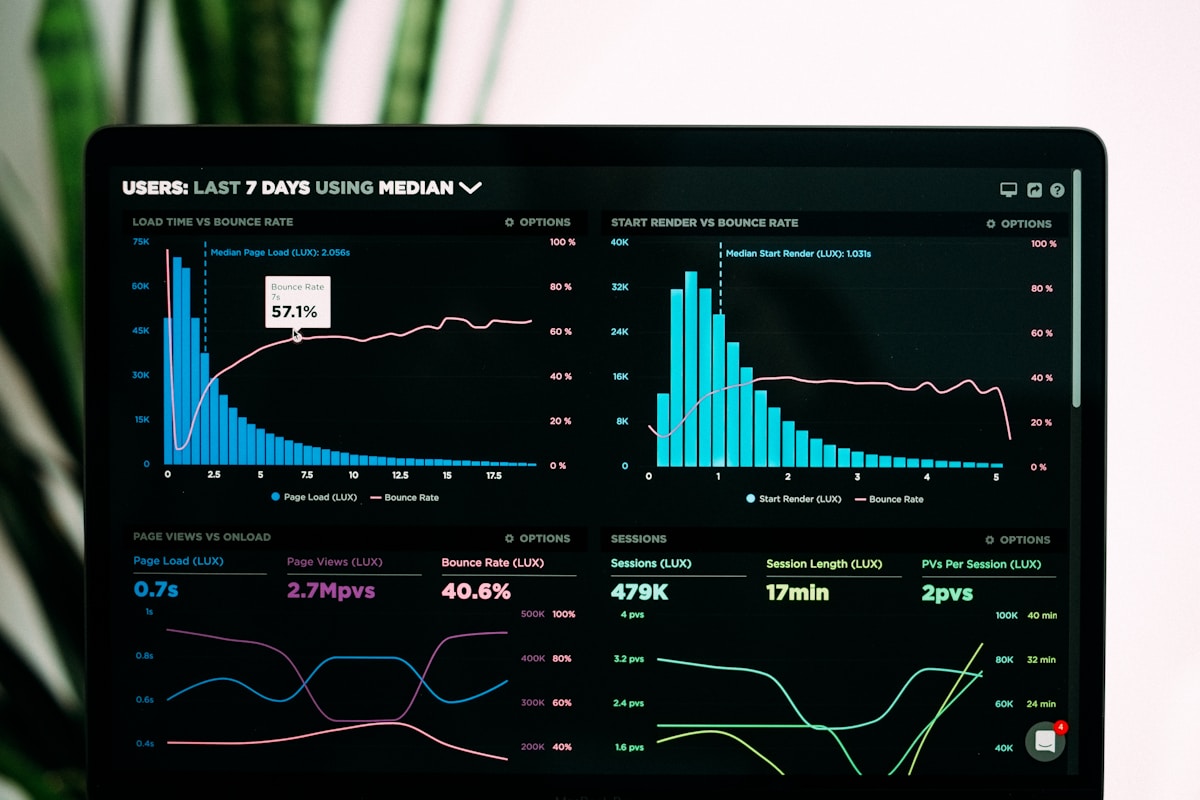
To be fair to the other side: this isn’t a story of AI-referred traffic being worthless, only of it being unevenly earned. Research from Conductor, spanning more than 13,000 enterprise domains, found AI-referred sessions growing 527% year-over-year and converting at 4.4 times the rate of traditional organic search. Volume is still low relative to organic. Growth and conversion quality are real. So this isn’t a dying category. It’s a splitting one. Sophisticated buyers are starting to ask sharper questions of anyone selling AEO/GEO as a separate line item, while the underlying opportunity keeps growing for whoever can actually answer those questions.
So where does “still SEO” fall short for AEO and GEO?
Google’s guide is accurate as far as it goes, but there’s a real gap if you stop reading at the headline: it’s a statement about Google’s own systems. AI Overviews and AI Mode run on Google’s index and ranking infrastructure, so it makes sense that the fundamentals which have always mattered for Google Search still matter there. ChatGPT, Perplexity, Claude, and Gemini don’t share Google’s index. They retrieve, weigh, and cite sources through different mechanisms, with different crawl-access requirements and different sensitivity to brand mentions across the web versus backlinks. And they show genuinely different citation behavior from each other, not just from Google. A robots.txt file that quietly blocks GPTBot or ClaudeBot doesn’t care what Google’s guide says about llms.txt. It still removes a site from that engine’s retrieval pool entirely — see our own documented findings on what AI Overviews actually cite for what this looks like in practice.
So “is AEO/GEO just SEO” doesn’t have one honest yes-or-no answer. For Google’s own generative features, the guide is right: strong foundational SEO is the load-bearing work, and chasing AI-specific file formats or content-chunking tactics for Google’s benefit is a poor use of budget. For the multi-engine reality most buyers actually operate in — where ChatGPT alone has roughly 900 million weekly active users, per OpenAI’s own February 2026 figures, the large majority of whom never touch Google in that session — treating every AI platform as if it works the way Google’s does is its own kind of overclaiming, just pointed the opposite direction from the AEO hype this critique is responding to.
What should you ask an agency charging a premium for AEO/GEO work?
Borrowed and sharpened from the three-question test above:
- Which tactics are you charging extra for, and do they hold up against Google’s May 2026 guidance for Google’s own features? If the honest answer is “these tactics only matter for Google, and Google itself says they don’t,” that’s a fair reason to push back on price.
- How do you measure success separately across engines, rather than as a single blended “AI visibility” number? Citation behavior varies meaningfully between platforms; a single average can hide a real gap on one engine while looking fine overall.
- What, concretely, is different from what a competent SEO retainer would already be doing? A defensible answer points to structured, multi-engine citation tracking, verified crawl access for non-Google AI bots, and measurement built for AI referral traffic — not to chunking, keyword-variant rewriting, or bolt-on schema Google itself says isn’t required. Our own Data Verification Standard is the kind of answer this question is actually testing for.
Frequently asked questions about AEO, GEO, and SEO
Did Google say AEO and GEO aren’t real?
No. Google’s guide doesn’t dispute that AI search behavior has changed. It says that, for Google’s own generative AI features, optimizing for them is an extension of standard SEO rather than a separate discipline requiring new tactics. That’s narrower than “AEO/GEO isn’t real,” and it’s specific to how Google’s systems work.
Does this mean llms.txt and schema markup are a waste of time?
Not for Google’s systems, where the guide says neither is required. That doesn’t make either useless everywhere: llms.txt is aimed at a broader set of AI crawlers than Google’s alone, and structured data remains good general SEO practice regardless of AI. The honest position sits between “you must have these” and “these are pointless” — neither is a Google requirement, and their value elsewhere is still developing.
Should I stop paying for AI search optimization work?
Not necessarily, but it’s fair to expect whoever you’re paying to answer the three questions above clearly, and to be skeptical of anyone whose pitch leans heavily on tactics Google has now explicitly said aren’t required for its own AI features.
What’s the actual, defensible case for paying extra for AEO/GEO work in 2026?
Measurable, multi-engine tracking of where and how often a brand is cited across ChatGPT, Perplexity, Gemini, and Google’s AI features, since these platforms behave differently from each other and from traditional Search, plus checking that a site isn’t accidentally blocking non-Google AI crawlers. That’s ongoing work distinct from standard SEO, even though it shares a foundation with it.
More on how this connects to the full AI search optimization approach is on the service page, and more Q&A on search and AI visibility is on the FAQ page. Or skip straight to it: ask directly on WhatsApp whether what you’re being sold holds up.

Get a straight answer on whether
your AEO/GEO spend holds up.
The Proof Audit covers your citation signals, schema implementation, content structure, and entity authority across every major AI engine — not just Google.